Plotter, printmaker, painter.
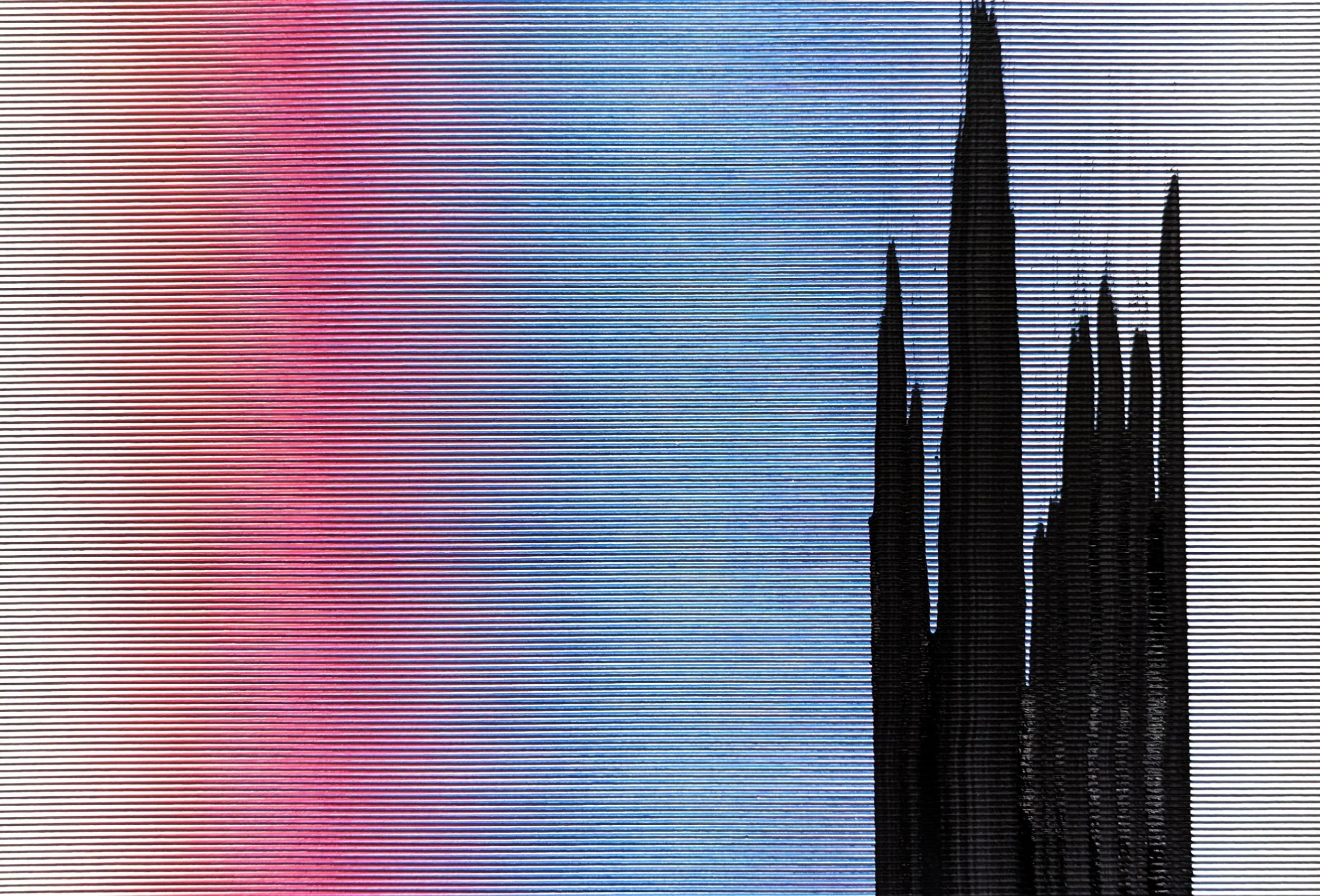
With an educational and professional background in architecture my workflow begins with designs created with drafting and 3D modeling software where the digital files created become a map, a set of instructions to dictate the actions of the computer controlled pen plotter. The mix of precision and repetition that plotters embody turn traditionally analogue media into printmaking tools. Pens once controlled only by hand draw precise identical lines over and over; brushes can repeat exact strokes, applying paint in the same location throughout an edition.
With traditional printmaking techniques like wood block, letterpress, linoleum, or silkscreen large areas of color are applied all at once. Plotting with pens lays down the ink one line at a time, overlapping and building textures slowly. Despite the identical application, plots can vary significantly as even the slightest shift in registration, or a subtle reduction in ink flow can change results significantly in each print.
True of any printmaking process, layering is essential to the final construction of a piece. Through trial and error I’ve built up an intrinsic sense of what densities and pen combinations will produce good results, but rarely do I accurately predict what those results are. My joy in artistic creation materializes as layers build and the final work reveals itself in unique and unforeseen ways. My artistic role becomes that of a participant in the ongoing conference of man, machine, and media.
I am currently pushing to expand my skills with traditional print techniques to integrate with the plotting process. While conversing and learning from artists whose knowledge of other techniques will advance my own work, I hope to reciprocally support their own research into the capabilities of drawing machines in their own practice. The adoption of art machines into the vernacular can only expand the physical art world in positive ways during a time when digital media reigns supreme.